Plumbing Program

Train for a Career in as Little as 10 Months
- Built for beginners who want a skilled trade career
- Work with real piping systems, fittings, and plumbing tools
- Designed for adults ready to move into the skilled trades
Train for your
new career
Start Building Your Future
"*" indicates required fields
Accelerate Your Career With Our Plumbing Program
If you’re looking for a hands-on career where you can build real skills to earn a steady living* plumbing offers long-term opportunities. Miller-Motte’s Plumbing program is designed to help students develop job-ready skills through a combination of classroom instruction and applied lab training.
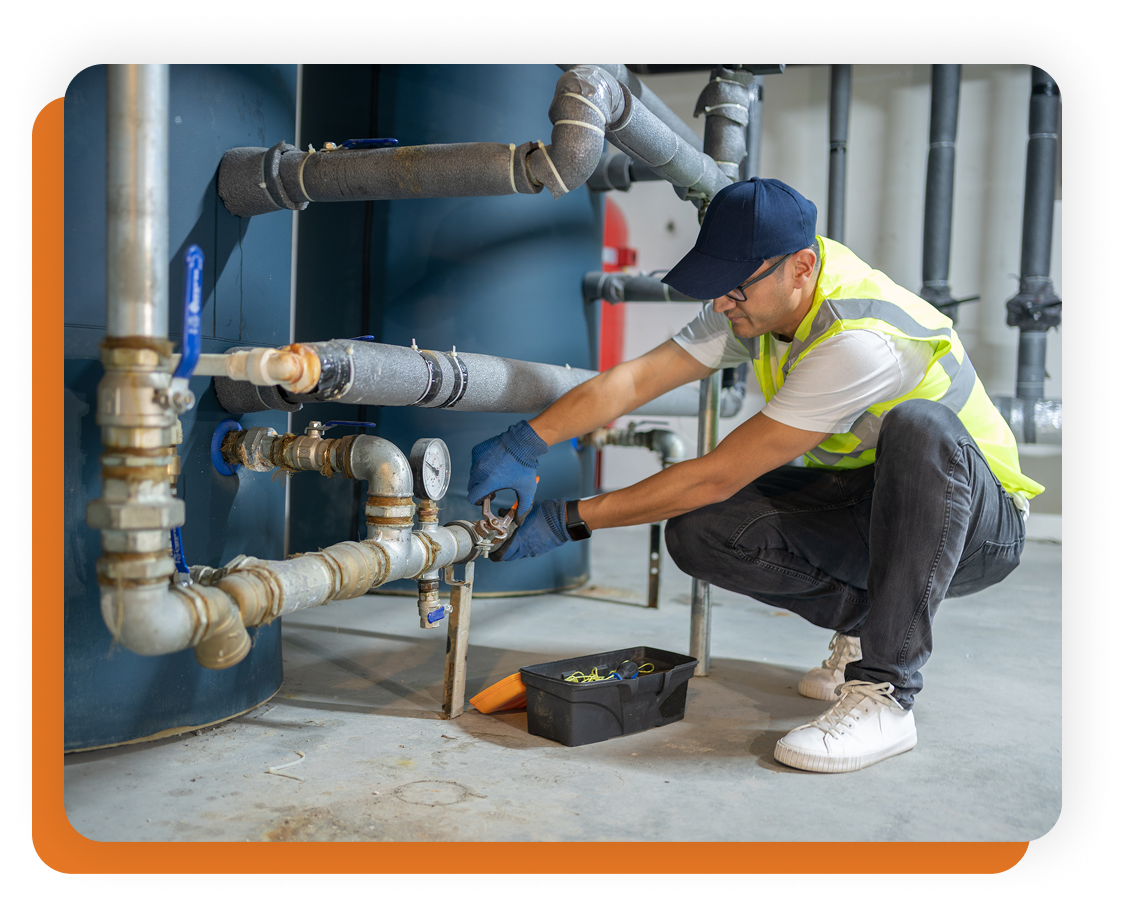
You won’t just read about plumbing systems, you’ll practice installing, cutting, assembling, testing, and troubleshooting piping systems in a supervised training environment.
Program Length: Approximately 10 months
Start Dates: Rolling enrollment every 5 weeks
Available at: Fayetteville, Raleigh, and Jacksonville, NC
*MMC cannot guarantee employment or salary.
Courses Included in the Plumbing Program
This course is designed to help students understand the basic fundamentals of the plumbing trade. From reading plumbing documents to completing essential plumbing math skills.
Get acquainted with the hand and power tools used in the plumbing environment. This course emphasizes safety and reviews not only how to use tools, but also how to properly maintain them for long use.
Pipes are the core of the plumbing profession. In this course you will learn the different types of pipes and valves, how to select the proper one for each project, and how to inspect and install them properly.
Gain proficiency in the art of installing, testing, and troubleshooting the plumbing for fixtures and appliances, using the proper tools and techniques. This course balances lecture and preparation with hands-on practice to ensure students can acquire both knowledge and skills.
Learn the methods behind sizing and protecting water supply systems. This course will cover the related plumbing codes, as well as the tools and methodologies associated with troubleshooting water supply problems.
Gain insight into the design and installation requirements of basement drainage systems, while practicing the fundamentals of successful sump pump and ancillary installation and maintenance.
Plumbing codes guide and inform the practice while ensuring safety and efficiency. This course will cover the details of the codes, especially pertaining to hydronic piping and solar heating systems.
This course will focus on code requirements and installation procedures relating to solar heating and hydronic systems. Students will review the procedures and skills required to effectively execute the tasks.
Hands-On Plumbing Training & Lab Experience
Hands-on training is a core part of this program. Students practice with industry-standard tools to solve real-world plumbing issues in lab environments that reflect residential and light commercial job settings.
Training includes:
- Measuring, cutting, and assembling PVC and copper piping
- Installing and testing plumbing systems
- Working with valves, venting, and drainage systems
- Applying plumbing codes and safety standards
Miller Motte’s Plumbing Program helps students build confidence before stepping onto a real job site.
Industry Recognition & NCCER Alignment
Miller Motte’s Plumbing Program aligns with training standards developed by the National Center for Construction Education and Research (NCCER), a nationally recognized organization that helps standardize training across skilled trades industries.
NCCER-aligned training supports:
- Nationally recognized skills standards
- Workforce readiness
- Portability of credentials
Many employers use NCCER standards to evaluate training consistency and entry-level readiness.
Miller-Motte does not guarantee third-party certifications. Certification requirements for taking and passing certification examinations are not controlled by Miller-Motte but by outside agencies and are subject to change by the agencies without notice to Miller-Motte. Therefore, Miller-Motte cannot guarantee that graduates will be eligible to take certification examinations, regardless of their eligibility status upon enrollment.
Enroll in A Plumbing Program Near You
Fayetteville, NC
-
 3725 Ramsey Street, Fayetteville, NC 28311
-
 (910) 759-7693
Jacksonville, NC
-
105 New Frontier Way, Jacksonville, NC 28546
-
(910) 320-8517
Raleigh, NC
-
3901 Capital Boulevard, Suite 151 Raleigh, NC 27604
-
(919) 855-2506
Career Outcomes & Where Graduates Work
Still unsure if plumbing is the program for you? Let’s walk through some of the main tasks and day-to-day routines of what it looks like to be a plumber.*
Graduates may pursue entry-level plumbing opportunities with:
-
 Locate and repair leaks
-
Cutting and assembling PVC and copper water and drain lines
-
Install piping and appliances
-
Repair and replace valves and piping
-
Maintain records of work assignments
Common Entry-Level Roles Include:
-
Provide quality customer service
-
Test and analyze drainage systems
-
Read technical designs and blueprints
-
Install and pipe sinks, toilets, and other appliances
-
Install & replace pools and hot tubs plumbing
Employment outcomes vary by individual and location. Miller-Motte does not guarantee employment or salary. The jobs mentioned are examples of certain potential jobs, not a representation that these outcomes are more probable than others.
Cost & Financial Aid Information
Program costs vary by campus and enrollment status. Tuition typically includes instruction, lab access, tools, and student support services.
Financial aid is available for those who qualify. Our admissions and financial aid teams can help you understand your options and determine eligibility.
Frequently Asked Questions
A plumbing technician installs, repairs, and maintains water and drainage systems in homes and businesses. On the job, they typically:
- Inspect plumbing systems to find leaks or issues
- Repair or replace pipes, valves, and fixtures
- Install sinks, toilets, water heaters, and appliances
- Clear clogged drains and test water flow
- Read basic blueprints or work orders
- Follow safety standards and local plumbing codes
It’s a hands-on career that combines practical skills with real-world problem-solving.
No, you don’t need prior experience to enroll in our Plumbing program. It’s designed for beginners and covers different topics like basic pipefitting and advanced repair techniques.
The terms are often used interchangeably, but there can be a difference depending on the job and licensing level.
Plumbing technician usually refers to someone trained to install, maintain, and repair plumbing systems, often working in entry-level or service roles.
Plumber can be a broader term that may include licensed professionals who have completed additional work experience and testing requirements.
In many states, becoming a licensed plumber requires on-the-job hours and passing a state exam.
Plumbing technicians often work under the supervision of a licensed plumber while gaining experience.
In short, a plumbing technician is typically starting or building experience in the field, while a plumber may hold a higher level of licensing and responsibility.
The Plumbing program prepares students for entry level careers within the plumbing field such as service technician. This program does not prepare students to take the plumbing licensing exam. Although the information taught in this program may be helpful, it does not prepare students to become a licensed plumber.